
If you live with chronic knee pain, you have probably been told some version of the same story. Rest it. Strengthen it. Ice it. Take medication. And when those stop working, start thinking about surgery.
For many people, that path feels discouraging. Surgery is expensive, recovery takes time, and results are not always guaranteed. Worse, some people are told they are not even candidates for surgery due to age or other health concerns.
This is where many patients come to Gray Chiropractic and Sports Associates. They are not looking for promises. They want clear answers and real options. Knee-on Trac is one of those options.
The knee is not a simple hinge. It is a load-bearing joint that depends on balance, spacing, and fluid movement to stay healthy. When something goes wrong, pain tends to linger.
Chronic knee pain often develops because of compression inside the joint. Over time, cartilage thins, joint space narrows, and the knee loses its ability to move fluid the way it should. Pain does not usually come from cartilage itself. It comes from pressure on bone and stress on ligaments and surrounding tissue.
Patients with arthritis, old ligament injuries, or meniscus damage often feel stiffness, aching, and reduced mobility. Walking becomes slower. Stairs feel harder. Activities that once felt normal start to feel risky.
Many of these patients are told surgery is the next step. Others are told to wait until pain gets worse. Neither option feels reassuring.
Knee-on Trac is a mechanical knee decompression system designed to reduce pressure inside the knee joint in a controlled and precise way.
Instead of forcing movement or loading the joint, Knee-on Trac gently separates the knee surfaces using calibrated traction. The femur and lower leg are stabilized with straps while the system applies a specific amount of force. This creates space inside the joint.
That space matters more than most people realize.
When the knee joint opens slightly, pressure on irritated bone decreases. Synovial fluid begins to move more freely. Ligaments and joint receptors receive new signals. For many patients, pain begins to ease because the knee is no longer under constant compression.


To understand why Knee-on Trac can help, it helps to understand what causes knee pain in the first place.
There are no nerve endings in cartilage. Pain usually comes from two main sources. Pressure on bone and irritation in ligaments and joint structures.
Knee-on Trac addresses both.
During treatment, the joint is gently distracted. This reduces load on the subchondral bone and allows synovial fluid to circulate more effectively. Synovial fluid acts like lubrication and nourishment for the joint. When movement is limited and compression is constant, fluid exchange slows down. Pain increases.
Dr. Gray explains it this way.
“The knee has a kind of balloon around it. That joint capsule produces fluid to keep everything moving smoothly. When the joint stays compressed, that system stops working well. Knee-on Trac helps restore that motion.”
By restoring spacing and movement, the joint environment begins to change. Pain signals calm down. Movement becomes easier.
This is not theory. It is something Dr. Gray has experienced personally and seen in patients.
“I have chronic knee issues from an old ACL and meniscus repair. After just two sessions, I had zero pain. I am not someone who exaggerates results.”
One of Dr. Gray’s patients, an 82-year-old man with cardiovascular issues, was not a candidate for knee replacement surgery. Before starting Knee-on Trac, he could walk six-tenths of a mile in nearly twenty minutes. After treatment, his walking time dropped to fourteen minutes and his pain level fell by half.
These are not isolated cases. They are examples of what happens when joint pressure is reduced and normal motion is restored.
Knee-on Trac is not designed to replace every knee surgery. It is designed to help people who fall into a large and often overlooked group.
It is especially helpful for people who:
For many patients, Knee-on Trac becomes part of a broader care plan rather than a standalone solution.
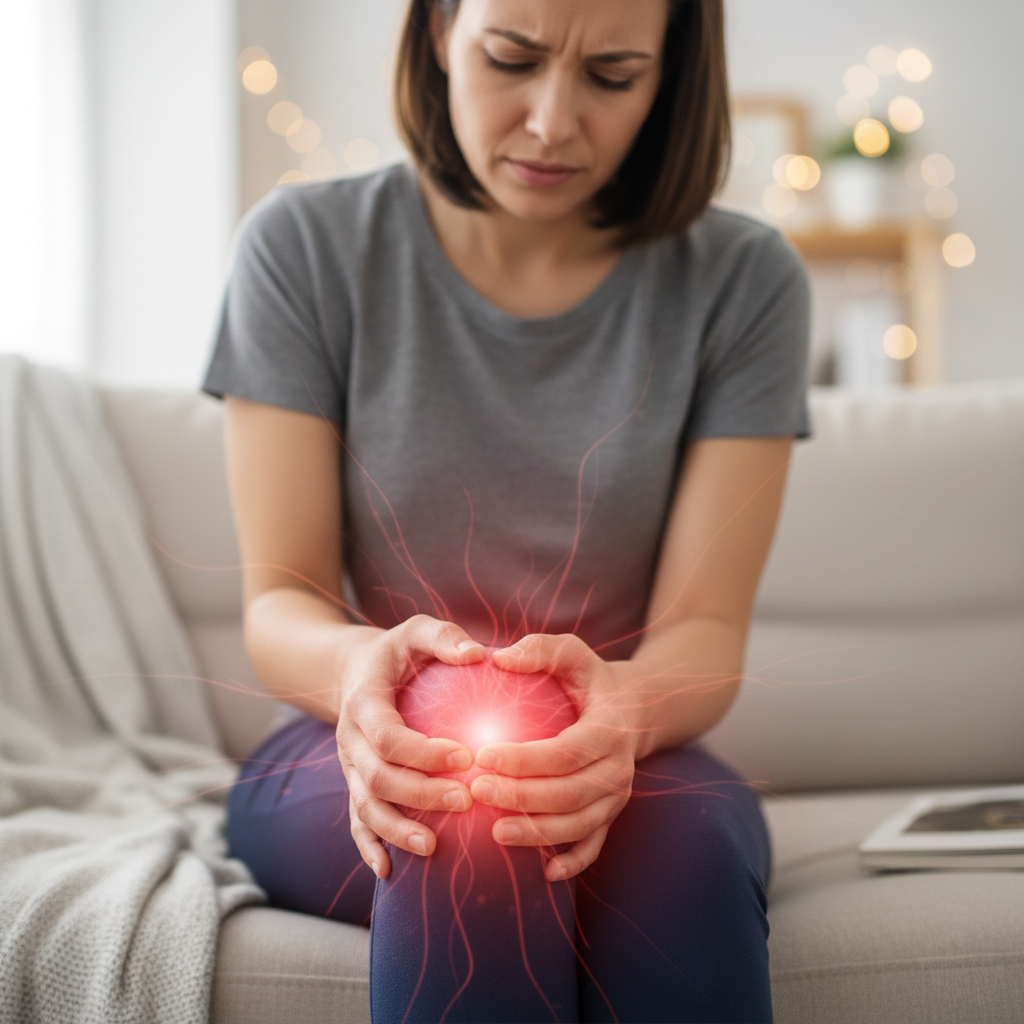
At Gray Chiropractic and Sports Associates, Knee-on Trac is not used in isolation. Dr. Gray evaluates the knee, surrounding joints, and movement patterns before recommending any therapy.
Chronic knee pain rarely exists on its own. Hip alignment, ankle mobility, gait patterns, and muscle balance all influence how much stress the knee absorbs.
Knee-on Trac is often combined with laser therapy to reduce inflammation, shockwave therapy for tendon and ligament healing, and biomechanical correction to improve how the knee functions during daily activity.
The goal is not just to reduce pain today. The goal is to create an environment where the knee can function better long term.
Many patients come to Gray CSA believing they are out of options. They assume pain means damage that cannot be changed.
That is not always true.
Pain often comes from compression, inflammation, and poor joint mechanics rather than irreversible damage. When pressure is reduced and motion improves, the body often responds.
Knee-on Trac gives patients a chance to explore a non surgical option that makes sense mechanically and clinically. It provides a step between basic care and major surgery.
For many people, that step is enough.
Treatment sessions are controlled, comfortable, and carefully monitored. Force levels are adjusted based on the individual. Protocols are selected based on the condition being treated.
Most patients describe the sensation as gentle traction rather than stretching or strain. Sessions are typically combined with other therapies to support recovery.
Results vary, but many patients notice changes in pain or movement within the first few sessions.
If chronic knee pain is limiting your movement or quality of life, Knee-on Trac may be worth exploring. The first step is not treatment. It is evaluation.
At Gray Chiropractic and Sports Associates, Dr. Gray takes the time to understand your history, your goals, and your options. If Knee-on Trac makes sense, it becomes part of a plan designed around you.
If it does not, you will know that too.